

Introduction
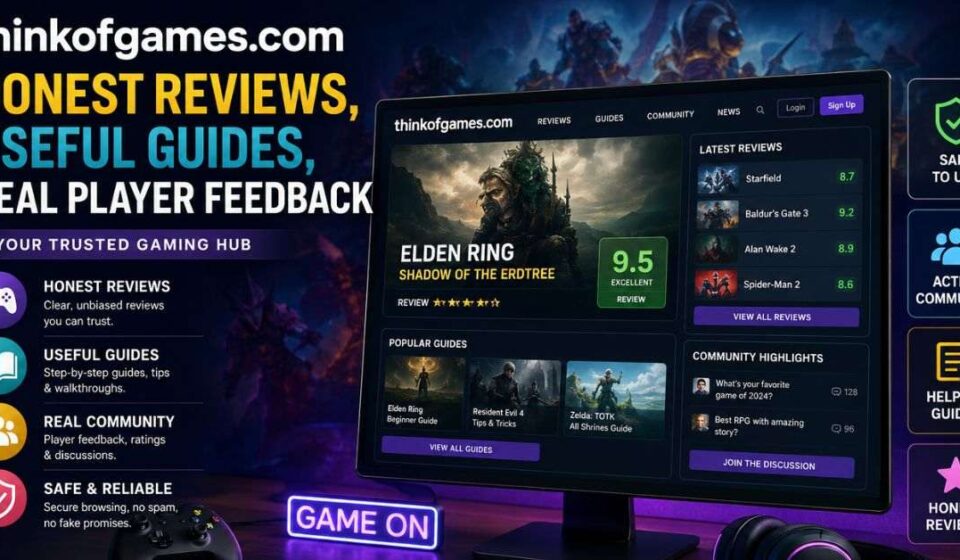
Finding a gaming website you can actually trust is harder than it sounds. Search results are full of thin content, recycled press releases, and reviews that read like ads. That is the gap that thinkofgames.com tries to fill. It is a gaming hub built around three simple ideas: honest reviews, useful guides, and real player feedback, all in one place.
If you have landed here, you probably want to know what the site offers, whether it is safe to use, and how it compares to bigger names like IGN or Metacritic. This guide answers that in plain, simple language, with no jargon and no fluff.
We will look at how the review section works, what the guide library covers, how community features function, and what real users say about their experience. You will also find two easy-to-read tables, five quick FAQs, and trusted outside sources so you can double-check everything yourself. By the end, you should know exactly what to expect and whether this platform fits how you like to research your next game.
What Is ThinkOfGames.com and Who Is It For
At its core, this is a gaming review and guide website covering PC, PlayStation, Xbox, Nintendo, and mobile titles across nearly every genre. It is built for players who like to check things out before spending money or time on a new title, not for people who just want a trailer and a hype train.
The site leans toward being a research tool rather than a pure news feed. It still covers updates, patch notes, and esports events, but its heart is in long-form reviews and step-by-step guides. Think of it as the friend who actually finishes a game and sends you a detailed message about whether it is worth your time.
This fits a few types of readers well: budget-conscious buyers who want to know if a game holds up over time, newer players who need beginner-friendly walkthroughs, and hardcore fans who want deep dives into mechanics and balance. Casual readers who want a quick yes-or-no might find the reviews long, but that depth is also why people return.
The site also covers newer trends, from GPU market shifts and hardware buying guides to browser-based games, showing it tries to cover modern gaming broadly, not just big-budget releases.
How the Review Process Actually Works
One thing that sets this platform apart is structure. Reviews are not random opinions thrown together in twenty minutes. Independent write-ups of the site’s editorial process note that articles typically run 1,500 to 3,000 words, with reviewers often logging 20 or more hours of play before publishing a score.
Each review tends to follow a repeatable pattern: an overview of what the game is trying to do, a breakdown of core gameplay loops, a look at graphics and sound, technical performance notes, and a final value assessment. This consistency lets you compare reviews across different games without relearning a new format each time.
Scoring is usually split into categories like gameplay, visuals, audio, story, and value, then combined into one overall number, often on a 10-point scale. Some reviews go further and show the exact weighting behind each category, so you see how the final score was built instead of just trusting a single digit.
Pros and cons are listed clearly, which is genuinely useful. A game can score well overall but still have a rough monetization system or a steep difficulty curve that matters to your taste. Good reviews call that out directly instead of burying it mid-paragraph. This kind of openness matches what search engines and readers now expect: real, demonstrated experience behind a review, not a reworded summary.
Game Guides and Walkthroughs Explained
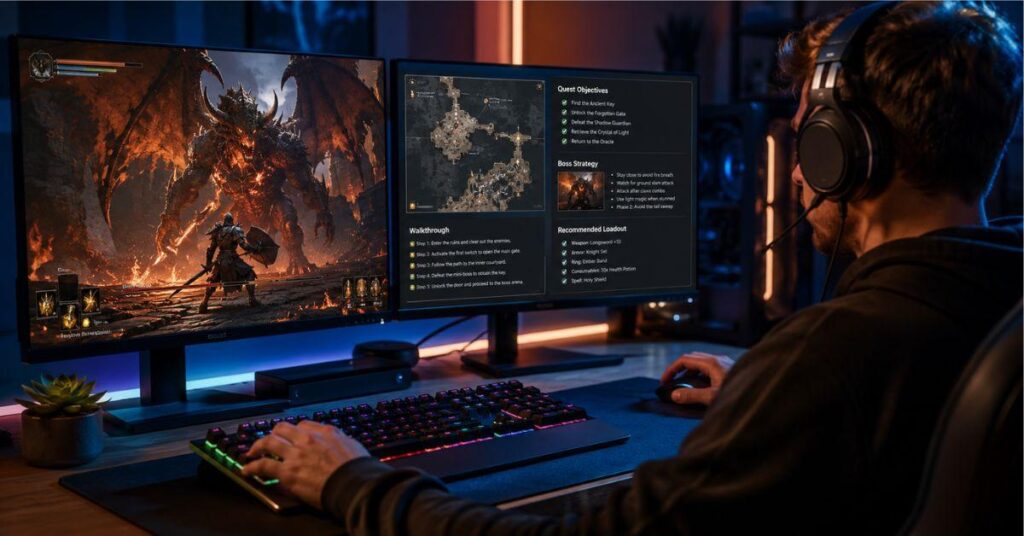
Reviews help you decide what to buy. Guides help you get through the game once you own it. This is where the guide library becomes a long-term companion rather than a one-time read.
Coverage is wide: story and quest walkthroughs, boss fight breakdowns, build and loadout recommendations, achievement checklists, and troubleshooting tips for crashes or performance issues. Some guides are very specific, like location walkthroughs for classic titles, while others cover broader systems like crafting or in-game economies.
The tone is practical rather than flashy. Instructions are written to be followed step by step, not admired as writing, which matters when you are stuck on a boss fight and just need clear, correct steps.
Guides get updated as games patch or change, which matters because a walkthrough written for an old version can send you down the wrong path. Always check the publish or update date on any guide, on this site or elsewhere, before following it exactly. For newer trends like building guides or PC hardware advice, the format shifts to cover comparisons, budgets, and common buying mistakes.
Community Features and User Reviews
A review site becomes far more useful when real players weigh in too. This community section places player scores and comments alongside the editorial review, not hidden at the bottom of the page.
Registered users can leave comments, join forum-style discussions, and submit their own ratings. Editor scores and community scores are usually shown separately, which is a small design choice with a big payoff. It lets you instantly see whether critics and everyday players agree, or whether there is a gap worth paying attention to.
That gap often tells its own story. A game might earn a strong critic score for narrative and art direction, while community scores drag lower because of bugs, monetization, or a grindy endgame. Seeing both numbers side by side gives a fuller picture than either alone.
Basic moderation helps keep spam and low-effort trolling from taking over comment sections. It is not perfectly clean, since no open comment system ever is, but it beats a completely unfiltered feed. If you leave your own review, be specific: mention what you liked, what frustrated you, and how many hours you played.
Is ThinkOfGames.com Safe to Use
Safety is a fair question before you create an account or read a site regularly. Independent security scans of thinkofgames.com have shown a solid trust score, with the domain not appearing on major spam or phishing blacklists and using a standard SSL certificate through a well-known hosting provider.
No scan is a lifetime guarantee, since sites change over time. A smart habit for any website is to check for the padlock icon in the address bar, avoid downloading files from pop-ups, and never enter payment details on a page that doesn’t clearly belong to an official checkout process.
If a site includes affiliate links or ads, treat them the same way you would anywhere: read the actual review text first, and treat sponsored callouts as extra information, not the final word. Reputable gaming sites are usually upfront about affiliate links or paid partnerships, and that disclosure is itself a good trust signal. General guidance from the Federal Trade Commission’s consumer advice on avoiding scams is worth keeping in mind no matter which gaming site you browse.
Comparing Review Depth With Other Gaming Sites
It helps to see how a review-focused hub like thinkofgames.com stacks up against names you already know. IGN is closer to a large media outlet with news, video, and reviews across games, movies, and shows. Metacritic isn’t really a review site at all — it averages scores from other outlets rather than producing its own long-form reviews.
A dedicated review and guide platform sits in a different lane. Instead of averaging other people’s opinions, it builds its own scoring system, backed by stated testing hours and a repeatable structure. That is closer to what a smaller, specialized outlet does well: fewer games covered, but more depth per title.
| Feature | Score Aggregator (Metacritic-style) | Large Media Site (IGN-style) | Dedicated Review Hub |
|---|---|---|---|
| Produces original reviews | No, averages others | Yes | Yes |
| Typical review length | N/A | Varies, often shorter | Often 1,500–3,000 words |
| Shows critic vs. community scores separately | Partially | Sometimes | Often, clearly labeled |
| Guide and walkthrough depth | None | Strong | Strong, practical focus |
| Community comments on reviews | Limited | Yes | Yes, alongside scores |
No format is objectively best. A fast, at-a-glance number works if that’s all you need. A full breakdown of the reasoning works better if you want to know exactly why a game scored the way it did.
Genres and Platforms Covered
Coverage breadth matters if you play across multiple platforms. A gaming hub worth bookmarking shouldn’t lean so hard into one console or genre that it becomes useless for everything else you play.
Based on published content, coverage spans PC, PlayStation, Xbox, Nintendo Switch, and mobile titles, plus a section dedicated to free browser games. That is a nice touch for readers who want something to play instantly without installing anything, especially during a short break.
Genre coverage is broad too, touching survival and building games, RPGs, esports titles, casual mobile games, and even crossover content like online platforms styled around video game themes. Hardware content, including GPU market analysis and graphics card buying guides, rounds out the picture for PC-focused readers who care about performance as much as gameplay. This range is useful for mixed households, since you aren’t forced to bounce between five different sites depending on what you’re checking.
How to Use the Site Effectively
Getting the most out of any review and guide platform comes down to a few habits. First, read the pros and cons before the overall score. Scores are useful shorthand, but the specific tradeoffs listed usually tell you more about whether a game fits your taste.
Second, compare the critic score against the community score when both are shown. A big gap is often a signal worth digging into, whether that means checking for bugs, monetization complaints, or a mismatch between what critics value and what players experience after 50 hours.
Third, treat guides as living documents. Check the publish date, and if a game recently patched, look for a newer guide before following it blindly, especially for build recommendations or quest order.
Fourth, use the comment sections. Reading a handful of real comments on a review often surfaces details the main article missed, like a bug on one console version or a tip that made a tough fight easier. Finally, if you leave feedback, be specific and honest rather than a vague thumbs up or down.
Why Trust and Transparency Matter in Game Reviews
Trust is the entire point of a review site. If a reader cannot tell whether a score reflects real, extended play or a quick first impression, the number becomes meaningless. This is why testing hours, clear scoring breakdowns, and separate critic versus community scores matter so much.
This connects to a bigger shift across the internet. Search engines and readers increasingly reward content that shows real, first-hand experience rather than reworded press releases. A review mentioning specific frame rate numbers, a particular boss fight, or an exact bug on one console reads very differently from a generic summary lifted from a marketing page.
Gaming remains a massive part of daily life, which is part of why trustworthy coverage matters. According to the Entertainment Software Association’s 2025 Essential Facts report, nearly two-thirds of Americans between the ages of 5 and 90, roughly 205.1 million people, now play video games regularly, and the average player is 36 years old. That is a huge, varied audience, spanning kids, working adults, and retirees, all of whom benefit from clear, honest information before choosing what to play.
Common Mistakes Readers Make When Choosing a Gaming Site
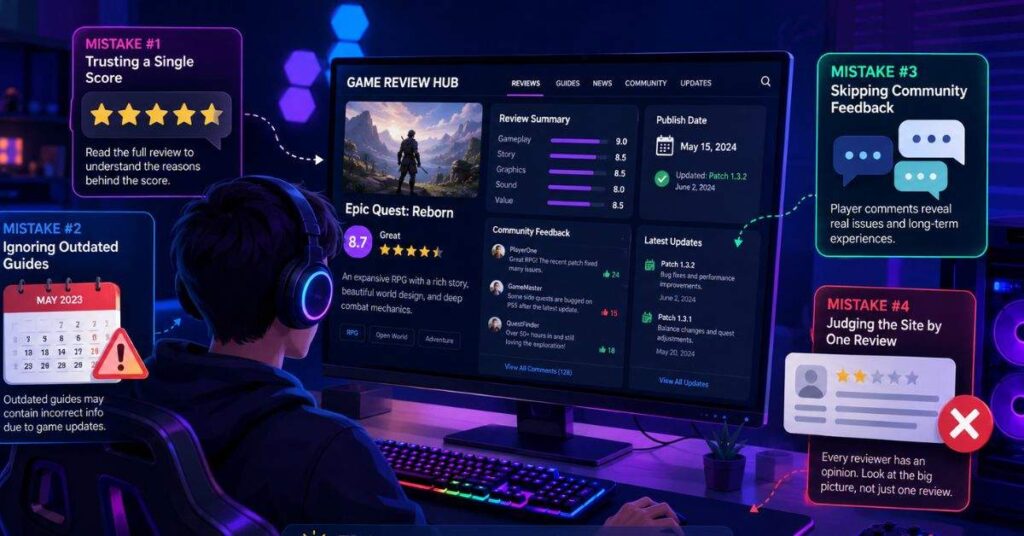
A few habits tend to lead readers toward disappointing purchases, no matter which website they use. The most common mistake is trusting a single score without reading the reasoning behind it. Two games can share the same overall number for completely different reasons, and only the written review explains that difference.
Ignoring the publish date on guides is another mistake. Game updates change quest order, balance, and even core mechanics, so a guide written a year ago may no longer match the current version.
Skipping the community section is a missed opportunity too. Editorial reviews are useful, but real player comments often reveal platform-specific bugs or long-term issues that only show up after dozens of hours, well beyond what a reviewer covered before publishing.
Finally, some readers judge a whole site by one bad review or one disagreement with a score. Every reviewer has some subjectivity. The goal of a good review hub isn’t to match your taste every time, but to explain its reasoning clearly enough that you can judge for yourself.
Quick Snapshot: Review Structure at a Glance
| Review Element | What It Tells You |
|---|---|
| Overview section | What the game is trying to achieve |
| Gameplay and mechanics | Combat feel, controls, learning curve, balance |
| Technical performance | Frame rates, load times, stability across platforms |
| Presentation and audio | Art direction, sound design, soundtrack quality |
| Value assessment | Whether the price matches the content and hours offered |
| Community score | How everyday players rate it after real play time |
Frequently Asked Questions
Is thinkofgames.com a legitimate gaming website?
Yes, it runs as a standard gaming review and guide hub with normal security signals like SSL encryption and no blacklist flags.
Does the site cover mobile and browser games, or just consoles?
It covers PC, PlayStation, Xbox, Nintendo, mobile titles, and a dedicated section for free browser games.
How long are the game reviews on average?
Most in-depth reviews run 1,500 to 3,000 words, based on extended play sessions of 20 or more hours.
Can I see both critic and player scores for the same game?
Yes, editor scores and community scores are typically shown separately so you can compare them directly.
Is it free to read guides and reviews on the site?
Yes, the core content, including reviews and guides, is free to read without a paid subscription.
Final Thoughts and Next Steps
Choosing where to get your gaming information, whether that’s thinkofgames.com or another trusted source, is a small decision that saves real money and real time. A site built around structured reviews, practical guides, and honest community feedback gives you more to work with than a single score or a flashy trailer ever could.
Across this guide, we looked at how reviews are built, what the guide library covers, how community input shapes the final picture, and how the whole approach compares to bigger aggregators and media outlets. The consistent theme is transparency: showing the reasoning behind a score, not just the score itself.
Before you buy a new game, take five extra minutes. Read the pros and cons on a review, skim a few community comments, and check whether a guide was recently updated. That small habit prevents most of the regret that comes from an impulse buy. Whenever you’re stuck on a tricky level or deciding between two titles, a solid guide and review platform is worth bookmarking so you always have somewhere reliable to start.